

Wash basin colours and finishes vary wildly, with white basins being the most common for many years. So, why are ceramic white sinks so popular and what are the latest trends in bathroom basin finishes? Learn more below.
Table of contents
- Why white coloured sinks are so popular
- Bathroom colour trends have changed
- Common alternatives to white ceramic basins
Why white coloured sinks are so popular
Ceramic sinks are made by combining clays and minerals, such as quartz, mixed thoroughly with water and then fired at a very high temperature of over 1,200 degrees Celsius. The result is a hard-wearing, fully sealed, smooth surface with a pure white appearance.
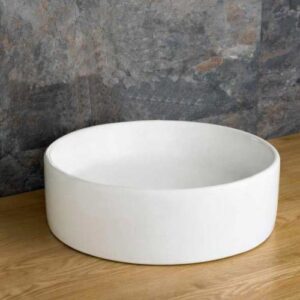
A white finish would seem to be an almost perfect colour for a bathroom sink for several reasons:
- White is a primary colour that perfectly combines with a range of neutral colours in your bathroom. Neutral wall colours such as beige, grey and cream often work well in a bathroom because they can make smaller spaces feel bigger. In addition, it’s often easier to find accessories that pair with a white basin rather than any other colour.
- If you think of hospital colours, white often springs to mind as the most sanitary colour used. And you want your bathroom or cloakroom to have that same feeling of hygiene and cleanliness.
- Toothpaste and soap scum can both leave white marks on wash basins, so a white sink is considered a way to camouflage those marks (at least until you next get around to the cleaning).
Bathroom colour trends have changed
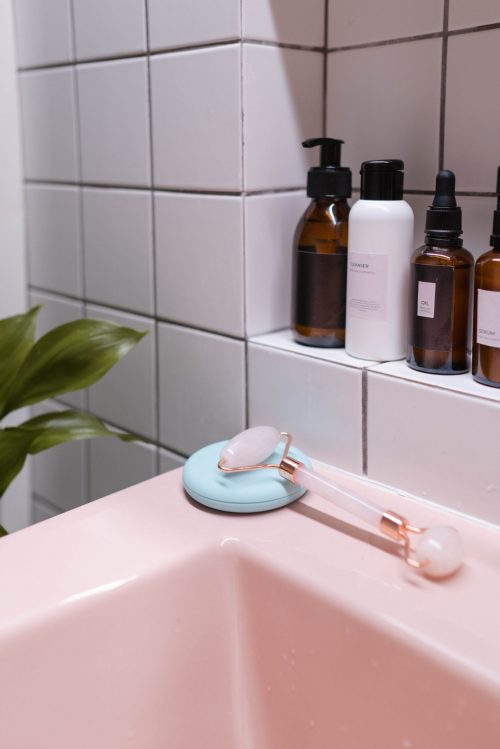
There’s an increasing variety of basin colours and finishes available for you to choose from. In the ’60s and ’70s, there was an explosion of exotic-sounding colours on the market. If you remember Pampas, Avocado, Champagne, Pink and Primrose bathroom suites, some specialist retailers still stock these retro colours if that’s your thing.
Today, rather than simply adding pigments to change the colour of a basin, alternative finishes are increasingly being used to produce basins with unique colours and textures.
Common alternatives to white ceramic basins
Stone Resin Sinks
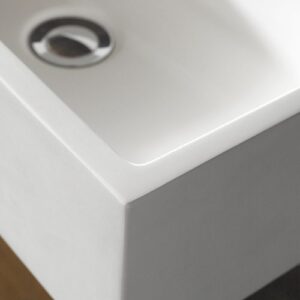
Stone resin is a highly durable material that can be moulded into almost any shape. These basins create a contemporary look and are often finished with smooth edges. A consistent pure white finish is always found in stone resin sinks.
Natural Stone Sinks
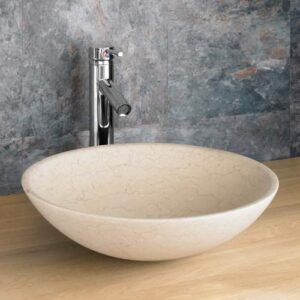
No two natural stone basins are alike, since there are always variations in the natural materials used to make them. Soft to the touch, natural stone sinks are the epitome of luxury and are a focal point in many bathrooms.
Stone basins are produced in different tones to match a variety of décor, including:
- Cream Galala – a light and subtle limestone with a luxuriously smooth finish
- Dark Grey Black – a sophisticated blue stone, almost black in nature
- Light Grey Sandstone – a modern, contemporary look for your basin
Hand Basins Made From Glass
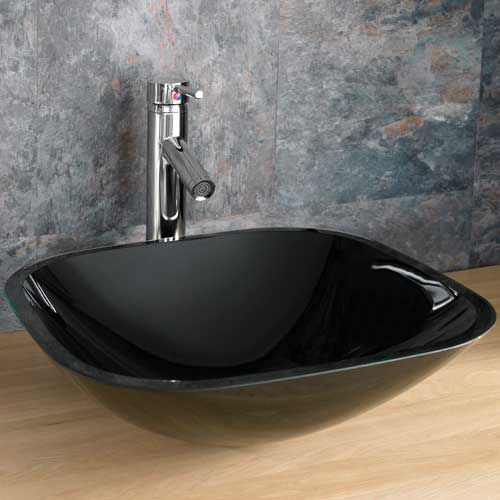
Strengthened glass is an ideal material for wash basins, as it is non-porous and therefore doesn’t mark easily. Glass sinks have a unique beauty which can look fabulous mounted onto a bathroom counter. These glass basins are mostly available in clear and frosted finishes or mono colours such as black or white.
Over the past 100 years, bathroom sinks have certainly seen changes. White is still the most common colour, but now there’s a wide range of other finishes to choose from. In addition, there are many different shapes, such as:
Plus, the variety of fixing options such as:
These give you more choices than ever when considering a new bathroom basin.
Why not check out more by heading over to our article on Everything you need to know about cleaning your bathroom and the 10 must-do’s in our bathroom furniture guide?

Was this guide useful?
Mentioned in this product guide: