


Underfloor heating comes with a full suite of benefits. It’s highly versatile, efficient, and it helps create a uniform temperature across each room. If that wasn’t enough, underfloor heating systems are surprisingly easy to maintain.
So, can underfloor heating get airlocked? Yes. This is why bleeding underfloor heating is something you’ll probably have to do occasionally.
To lend a hand, at Plumbing Superstore, we put together a detailed guide on how to bleed underfloor heating. Without further ado, let’s jump in.
Table of contents
- What to do before you bleed underfloor heating
- How to bleed underfloor heating
- Looking after your underfloor heating system
What to do before you bleed underfloor heating
Just as with a standard central heating system, air can occasionally get trapped in your underfloor heating system.
What are the tell-tale signs?
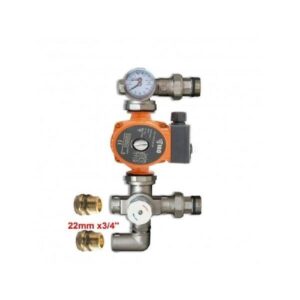
You’ll start hearing gurgling noises coming from inside the system. At the same time, the system won’t be able to generate as much heat as it normally does. Additionally, the pressure might be too low.
So, once you’re convinced the system needs bleeding, there are a couple of things you need to check before springing into action.
First, check that all components, such as boilers, circulating pumps and motorised valves, are functioning properly, and there are no leaks. The air bleed valves will confirm there’s air trapped in the boiler or elsewhere.
Second, check the pressure. If it’s too low, try adding water. If the system is unresponsive or the pressure remains consistently low for long time periods, this might be a sign of a deeper underlying issue. At this point, it’s best to call the professionals.
Now you’re ready to move on to the main part of the project.
How to bleed underfloor heating
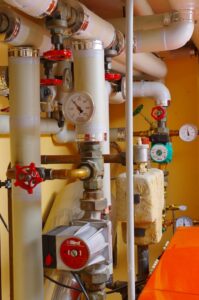
Once the system is filled with water, wait about 10 minutes before you start bleeding it. In essence, the process involves attaching a pump, which allows water to be flushed out of the drain valve found on the lower manifold bar, one port at a time.
If you’re familiar with central heating systems, you should be able to recognise many of the components of your underfloor heating system, which are quite similar to the equivalent central heating pump bleed screw, central heating bleed valve and boiler bleed valve.
Having said that, here’s how to flush the underfloor heating system step by step.
Step one
Close the ball valves on the flow and return valves. Then close all heating circuits located on the heating circuit manifold.
Step two
Remove the locking caps and close the flow rate indicators on the first valve.
Pro tip: Start with ports heating the lower underfloor heating section of your home before moving on to those heating the upper part.
Step three
Connect the flushing and filling pump to the respective valves. Remember – the filling one is always on the upper manifold, and the flushing one is always on the lower manifold.
Step four
Open the first port, return and flow. Then switch on the flushing pump. Continue flushing until no more air bubbles are exiting the system.
Step five
Close the valve and, working methodically, repeat the same process for each remaining valve.
Step six
Disconnect the flushing and filling pump, close the two valves and replace the locking caps.
This ought to do it.
Once you’ve refilled the system with water, it’s a good idea to observe the pressure. It should be between 1.5 and 2 bar, without major fluctuations.
If that’s not the case, chances are you have more serious problems than an underfloor heating airlock. So, you’d better call professional plumbers sooner rather than later to have the entire system thoroughly examined.
Looking after your underfloor heating system
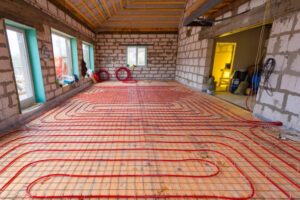
Underfloor heating systems are fairly low maintenance when installed competently and in full compliance with the manufacturer’s instructions.
So, as long as that’s the case, all you need to do is carry out routine maintenance, such as monitoring the pressure, checking for leaks and noting any untypical dips in the overall performance.
If everything is in order, bleeding your underfloor heating system is something you’ll have to do very rarely.
Luckily, now that you’re fully aware of how to bleed underfloor heating, you should be more than equal to the task.
For more info on how underfloor heating works, check out our handy guide.

Was this guide useful?
Mentioned in this project guide: