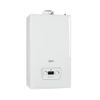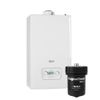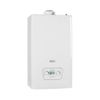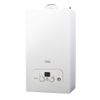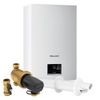


There is a broad range of boiler types in the UK. With fossil fuel boilers (oil and LPG) set to be phased out, it’s important to know what the current boiler market has for you. Especially when, as of now, the future of gas boilers in the UK remains uncertain with no fixed phase-out date. That’s where this dedicated guide comes in.
If you know the different types and want to know more about boilers in general, our buyer’s guide has the information for you.
Table of contents:
- Combi boilers
- Conventional boilers
- System boilers
- How do I know if my boiler is condensing?
- To conclude
Combi boilers (aka, combination boilers)
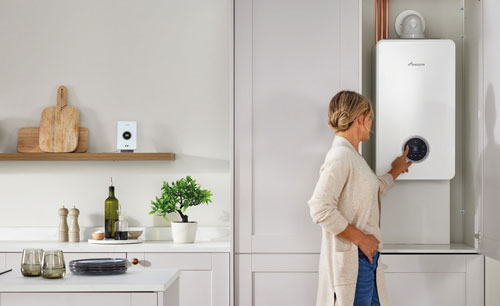
Combi boilers are ‘combination boilers. They’re named as such because they provide both heating and hot water on demand from one unit. They have a compact design which is perfect for smaller homes and flats with limited space and are straightforward to maintain. Ideal if you’re looking for a cost-effective solution with an immediate supply of hot water. Particularly favoured in new builds.
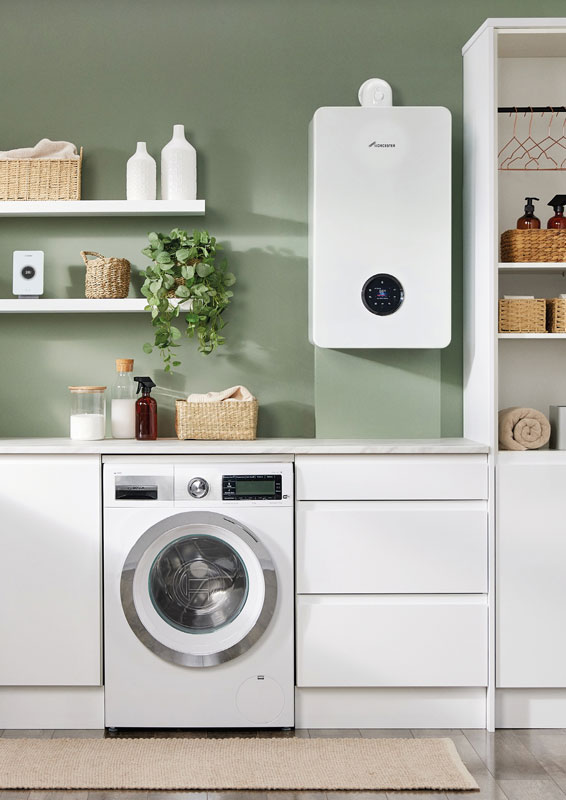
To summarise:
- A single unit
- Heating and hot water on demand without the need for a separate tank
- Compact size that’s great for limited space (esp. homes with no loft for space with a hot water tank
- Simple maintenance
- Favoured in new builds (esp. homes and flats)
- Suitable for smaller homes with one bathroom and 10 or less radiators
- Cost-effective
Combination boilers – How it works
They’re connected to the mains cold water supply and heat water on demand. When you need hot water, the combi boiler burns fuel and provides via an integral heat exchanger that heats up the cold water instantly from the mains supply as it flows over it.
Benefits and disadvantages
Here are some of the benefits of a conventional boiler:
- Installation made easy as you can have one unit without a separate tank
- All system features are enclosed in one unit making a neat design
- Repairs are easy to arrange as most engineers are trained to service these boilers
- No tank means hot water is instant because there’s no need to wait for water to heat up
- Maintenance costs are kept low as the built-in heating and hot-water functions are usually covered by the manufacturer warranty
- You save in bills and help the environment since these Modern models hit over 90% efficiency
- You have safer and fresher water since it comes straight from the mains
Here are some things that can make the boiler not for you:
- Poor flow rate or low incoming pressure from your mains can affect boiler performance and cause pressure issues
- Flow rate can drop when you want hot water in more than one place if you have multiple bathrooms where people might shower at the same time
- Power showers aren’t an option because it needs hot and cold feeds from a gravity-fed system
- The system has moving parts which increases the risk of issues occurring
- A typical combi boiler is not compatible with solar water-heating systems
Conventional boilers (aka, regular boilers, heat only boilers)
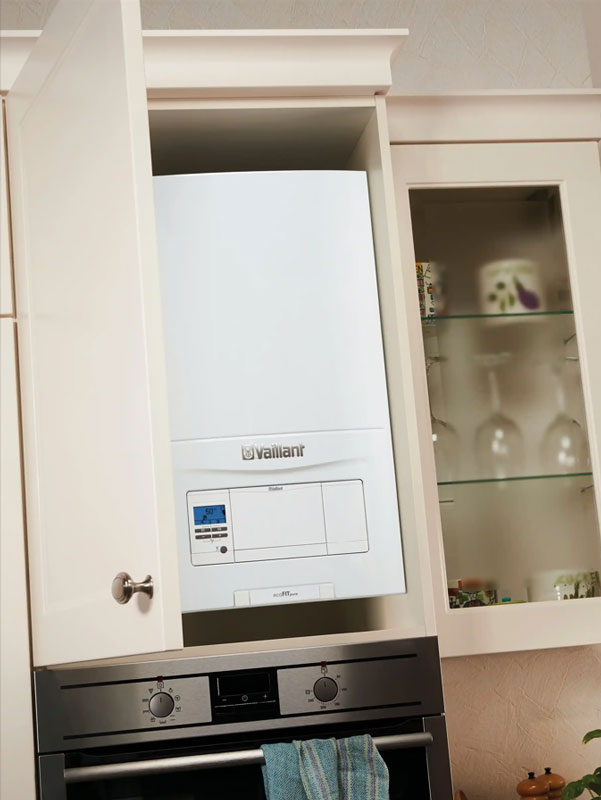
Conventional boilers operate in an open vented system. They have external components like pumps and valves. Although they do not supply hot water, they excel at heating rooms for extended periods of time. What’s more, they have a straightforward design, working well with older radiators. This is ideal as cost-effective solution suitable for those who are more budget conscious.
To summarise:
- An open vented system with external components (valves and pumps)
- Does not supply hot water but heats rooms for extended time periods.
- Straightforward design that works well with older radiators
- Cost-effective if you’re budget-conscious
- Suitable for older, larger homes with more than one bathroom
- Ideal for low mains pressure systems
Conventional boilers – How it works
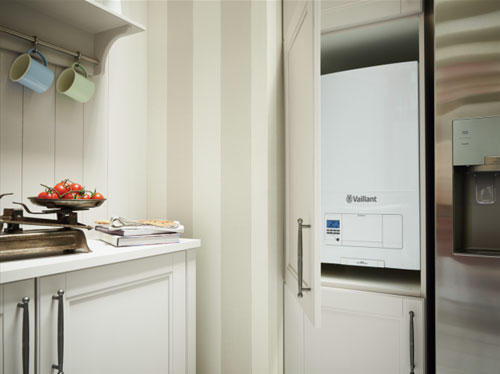
A heat exchanger warms water when fuel is ignited, like a combi boiler. The difference is a pump transports the water to a storage tank. The hot water then flows through to the radiators to heat them or into taps when switched on.
Benefits and disadvantages
Here are some of the benefits of a conventional boiler:
- You can use multiple hot taps at the same time.
- They can have solar compatibility, so you have cost-effective results and are supporting the environment
- Even when your boiler breaks down, hot water can be resourced via an electrical immersion heater installed in the cylinder
- They’re cheap boilers to replace
- They have a low pressure and don’t rely on high mains pressure so are ideal if your heating systems are older
Here are some things that can make the boiler not for you:
- Hot water is not typically available on demand as the cylinder will need to heat up over time
- Efficiency is not a strong point with conventional boilers because heat is lost from water stored in the cylinder
- Design isn’t compact so you will need sufficient space for the tanks and the boiler
- Water is limited so when the hot water tank runs out you must wait for this to refill before using more hot water
System boilers
System boilers feature elements of conventional and combi boilers. Their hot water cylinder is substantial but runs within a sealed system. This makes them more ideal for larger homes with multiple bathrooms where high hot water is in demand. Since they ensure consistent hot water flow to multiple outlets simultaneously, they are larger in size because of their cylinder.
That said, hot water does not need to be on continuously for the central heating. Insulated cylinders can maintain the heat for hours to sometimes a day after being heated by the boiler or immersion heater.
To summarise:
- Combination of conventional and combi boiler design
- Large hot water cylinder runs within a sealed system
- Suitable for larger homes with multiple bathrooms and modern central heating systems
- Long-lasting heat for hours to a day thanks to insulated cylinders and immersion or boiler heating switch on
- Ideal if no access to low mains pressure
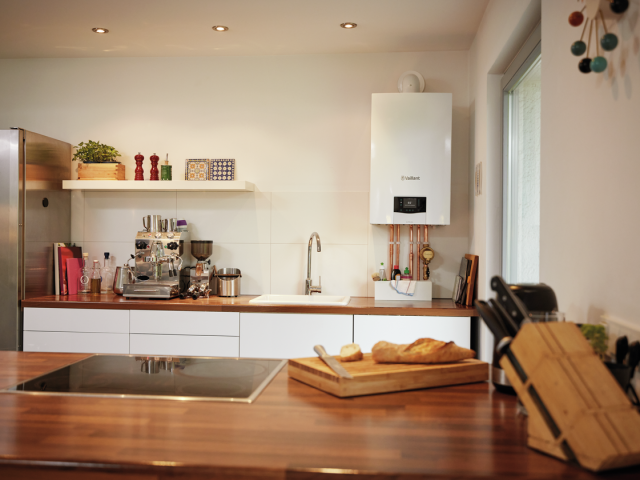
System boilers – How it works
A system boiler has similar functions to conventional boilers, with the main difference being variation of components.
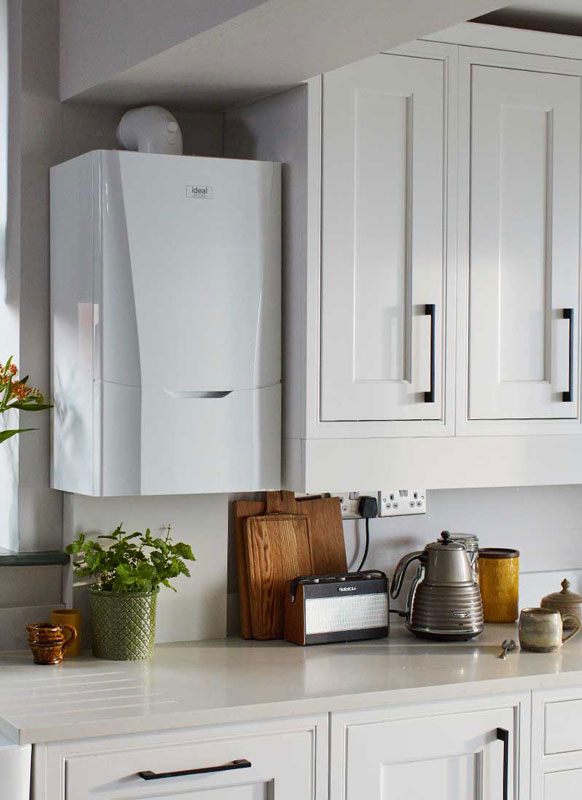
Benefits and disadvantages
Here are some of the benefits of a conventional boiler:
- Many components of these boilers are integrated which means it doesn’t need a cold water tank so doesn’t take up room like a conventional boiler
- No components in the attic means you can relax knowing there won’t be potential leaks or freezing during colder months
- There are minimal parts to them, so they are quick to install
Here are some things that can make the boiler not for you:
- Like combi boilers, mains pressure quality affects how the system boiler functions, so it won’t work well if your mains have poor flow rate or incoming water pressure
How do I know if my boiler is condensing?
You’ve established which type of boiler, so what does condensing mean? Well, here’s why it’s essential to know why condensing boilers must be used.
What is a condensing boiler?
A condensing boiler is a boiler that has significant energy-saving benefits. This is done by extracting additional heat from the exhaust gases typically lost in a boiler design.
When combustion gases within the condensing boiler cool down, the water vapour in the exhaust condenses into liquid water. This heightens the boiler’s efficiency; in some cases, to levels of up to 99%.
Condensing boilers are also typically more environmentally friendly and cost-effective long term. They consume less fuel and produce lower emissions, so are particularly suitable for modern heating systems. Things like underfloor heating, where lower water temperatures are used.
What is a non-condensing boiler?
First and primary thing to know about a non-condensing boiler is they are now illegal to install in the UK as per government regulations. Modern law now states boilers must have a minimum efficiency of at least 92%.
A non-condensing boiler does not capture latent heat from exhaust gases. They release hot gases into the atmosphere, resulting in lower energy efficiency (70-80%). This means you’re more likely to find these boilers in older heating systems like traditional radiators as they run at higher water temperatures.
To conclude
Now you’ve had the different boiler types explained, you can make an informed decision for your latest heating project. Just ensure your boiler is condensing and that whichever type you choose can fit in your property and work well with your existing system requirements.
Was this guide useful?
Mentioned in this product guide: