


Magnetic system filters are essential for the performance of central heating systems. They help prevent them from clogging up with debris over time, an issue that can lead to reduced performance, higher energy bills, and a less comfortable home.
That’s why we’ve taken a deep dive into magnetic filters to bring you the ultimate buyer’s guide. If left unchecked, a large accumulation of sludge in a heating system can cause significant damage to your boiler, pipework, and radiators. That could take hundreds or even thousands of pounds to repair. So make sure you’re aware of what you need to do to reduce the risk of these issues moving forward
Table of contents
- What is a magnetic filter?
- What are the benefits of a magnetic filter?
- Where to fit a magnetic filter
- How to clean the magnetic filter on a boiler
- How long do magnetic filters last?
- Why a magnetic filter is a wise investment
What is a magnetic filter?
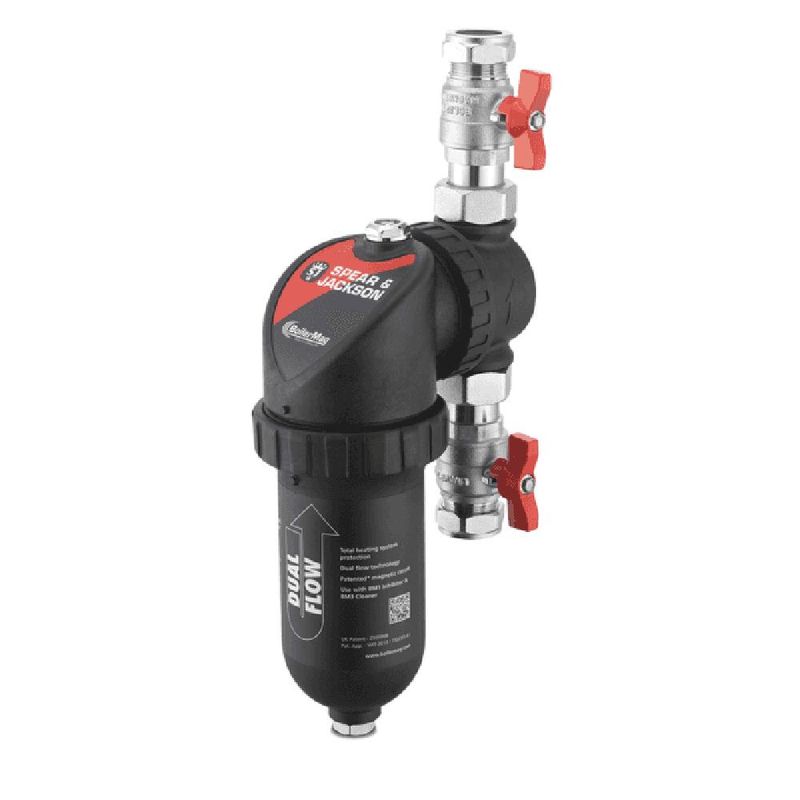
As water passes continuously through your central heating system, some of your pipes will inevitably rust. This rust peels off and mixes with dirt and debris; you get the dreaded sludge. Enter the boiler magnetic filter.
Essentially, this is a large magnet device which attracts small particles and filters them out of your central heating system, thus preventing the gradual build-up of sludge and allowing water to continue to flow freely.
When should I fit a magnetic filter?
We recommend doing so when you install a new boiler. Having said that, here are the tell-tale signs you need a central heating magnetic filter as soon as possible:
- Persistent cold spots on your radiators
- Gurgling noises from your boiler
- Reduced hot water flow
- Regular leaks
If you get these repeatedly, it might be time you considered a new magnetic system filter.
What are the benefits of a magnetic filter?
There are plenty of benefits to installing a magnetic filter for central heating systems. We’ve already mentioned the obvious one, which is preventing the formation of harmful sludge.
While this should be enough in and of itself, several additional advantages will more than offset the initial boiler filter cost:
- Lower energy bills
- Reduced carbon footprint
- Longer boiler service life
- More efficient heating system
- Less likelihood of frequent, expensive repairs
So, in case you were wondering, ‘Is it worth getting a magnetic filter?’, you now have your answer.
Where to fit a magnetic filter
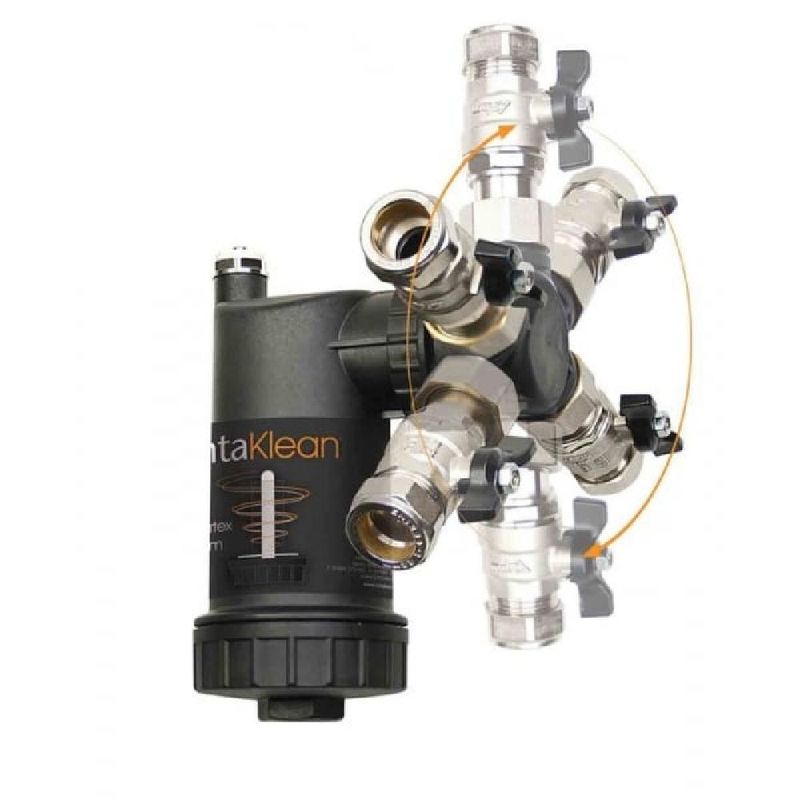
A magnetic system filter is normally fitted to the boiler’s return pipe between the last radiator and the boiler so that flowing water can break any build-up before it gets to the filter.
You could fit it on the flow, but that would require extra work from your boiler, as any dust and debris would have to go through the boiler first.
In terms of the actual installation, it’s best to leave it to a Gas Safe certified engineer. They’ll typically follow these steps:
Step 1
Drain the central heating system.
Step 2
Mark the location on the pipe where the boiler water filter is to be fitted.
Step 3
Cut the excess pipe.
Step 4
Place valves on both ends of the open pipework.
Step 5
Fit the magnetic filter and tighten it securely.
Step 6
Re-pressurise the system.
How to clean the magnetic filter on a boiler
You should clean your central heating magnetic filter once a year. Here’s how it’s best to go about it:
Step 1
Turn off your boiler and the mains electricity supply.
Step 2
Shut off the isolating ball valves to remove the filter from the system.
Step 3
Take the lid off the filter.
Step 4
Remove the filter and clean it thoroughly.
Step 5
Replace the filter.
Step 6
Turn your electric supply back on and test the system.
Keep in mind that there’s a wide range of magnetic filters which can differ significantly. For instance, some come with isolation valves, while others don’t.
So, always check the manufacturer’s instructions.
How long do magnetic filters last?
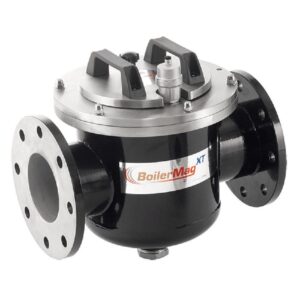
As long as you’ve installed your central heating system filter properly and continue to clean it regularly, it could potentially last for anywhere from 10 to 20 years.
Naturally, the actual service life will depend on multiple factors, such as the quality of the filter (the best central heating filter for your home is not necessarily the most hyped one) and whether you live in an area with hard water (hard water causes significantly greater limescale build-up than soft water).
So, unless you experience significant blockage and/or leaks, you should replace your magnetic filter whenever replacing your boiler.
Why a magnetic filter is a wise investment
Prevention is better than a cure. That’s never been truer than when it comes to your central heating system.
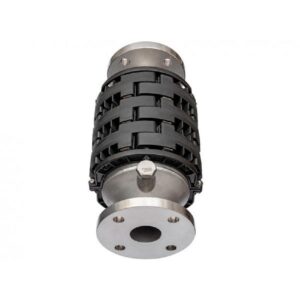
So, do yourself a huge favour by getting a magnetic system filter. It’s one of those things we rarely think about that can nevertheless make a massive difference in our everyday lives.
With plenty of available options on the market, you won’t have to look far and wide to get the right central heating magnetic filter for your home.
Was this guide useful?
Mentioned in this product guide: