


Sustainability is coming to the forefront of building design and heating as pressure grows for housebuilders to deliver large quantities of homes whilst keeping their energy efficiency and environmental impact to a minimum.
More than ever before, homeowners are insulating their houses further. Now they’re choosing to switch to sustainable alternatives to gas and electric heating.
As a result, air source heat pumps and ground source heat pumps are becoming the go-to choice to provide sustainable heat for carbon-conscious homes.
With that in mind, let’s find out more about them.
Table of contents
- How do ground source heat pumps work?
- Ground source heat pumps advantages
- How much do ground source heat pumps cost?
- Why you should consider a ground source heat pump
How do ground source heat pumps work?
A ‘ground loop’ is a pipe that’s filled with a mixture of water and antifreeze that’s buried in the garden. It circulates this water and anti-freeze mixture to absorb heat from the ground, which then warms up further using a heat exchange and heat pump.
The heat pump uses a small amount of electricity to increase the temperature of the water for use around the home. This hot water can be used to heat:
- Radiators
- Water
- Underfloor heating
How much hot water you need impacts how big the ground loop needs to be. This is also influenced by how much space is available. Instead of a ground loop, it’s possible to install a vertical borehole downwards, which is ideal for smaller gardens.
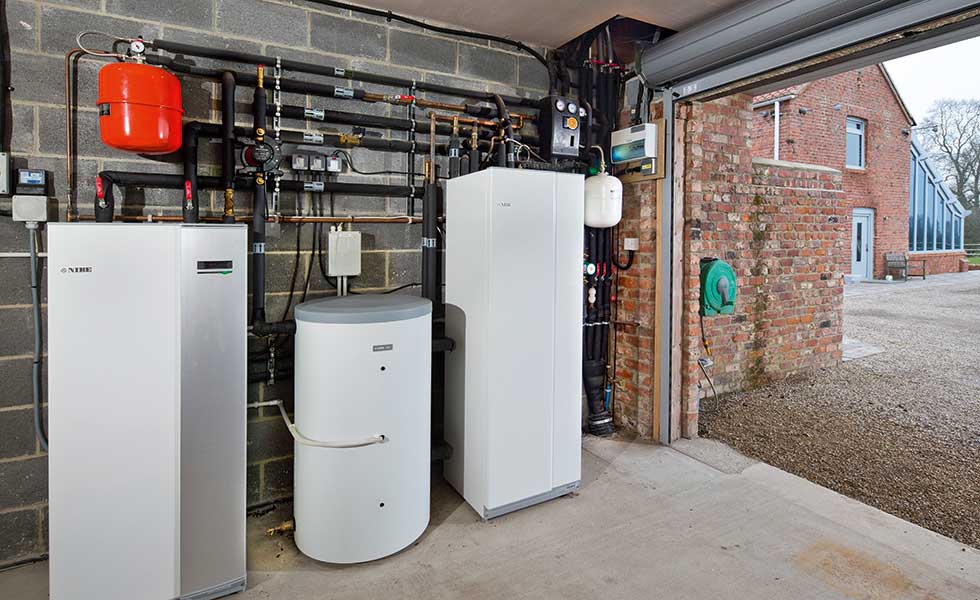

Ground source heat pumps advantages
A ground source heat pump has many advantages, not just relating to its sustainability.
- Ground source heat pumps are eco-friendly since the ground is a renewable heat source.
- When replacing off-mains gas, these pumps pay for themselves quickly.
- Lower temperatures over longer periods work well for highly insulated homes.
- Cheaper to run than electric heating.
- More efficient than air source heat pumps.
Ground source heat pumps disadvantages
A couple of disadvantages to ground source heat pumps include that your property may not be suitable.
- Ground source heat pumps should be installed in a well-insulated property for maximum efficiency.
- Hard rock and certain types of soil won’t allow the installation of a ground source heat pump.
- A small garden won’t allow for a ground loop, so a vertical borehole may be required.
- Your property needs to be accessible by a mini-digger.
- Installation can be costly if not done in combination with other works or new builds.
How much do ground source heat pumps cost?
Ground source heat pumps have a working life of at least 20 years. Many will last longer than this and will continue to operate for years after if their maintenance is kept up. This maintenance involves yearly checks by the homeowner, with checks by a professional every couple of years. The installer should tell you how to inspect your ground source heat pump properly.

Based on a 4-bed detached home, a ground source heat pump for this size would cost around £13,000 to install. For smaller properties that are well-insulated and terraced, for example, this cost could be nearly half. It’s worth getting a specialist to quote for you before investigating this route further, as the soil in your garden may be prohibitive even if the cost isn’t.
Why you should consider a ground source heat pump
Investing in a ground source heat pump offers many benefits that make it a compelling choice for sustainable heating and cooling solutions.

With long-term durability and minimal maintenance requirements, ground source heat pumps offer both economic and environmental advantages. This makes them a smart investment for homeowners looking to reduce their carbon footprint and energy costs.